
A local expert offers advice for parents of children with Asperger’s to help them thrive through challenging times.
By Michael Uram
Kids can thrive in the face of incredible challenges — including a year-long stay-at-home order — with the right tools. So long as we listen to them, respect their boundaries, understand their needs, and guide them to healthy activities, they have a great chance of success. It’s so much work as a parent to support their success and growth and have a balanced life. Over the past year, we have had to let go of our control over so many of our expectations, routines and boundaries for everyone’s mental health and peacefulness. We are approaching a time where a sense of normalcy also means a return to our children experiencing potentially triggering situations, schools, peers and a lingering fear of the unknown.
Children with Asperger’s syndrome are especially vulnerable to experiencing distress when faced with going beyond their expected comfort zone, schedule and familiar faces. As a parent, you feel the obligation to do your best to make this transition into the outside world as comfortable and welcoming as possible. Here are a few ideas that may help your child tolerate the discomfort of these experiences:
Emotion-Based Planning
While front-loading your child with all the expected events, people and sensory experiences that they may face is the ideal method, I have found a slightly simpler method to be just as effective. Emotion-based planning can get to the core of what your child is truly seeking. They want to feel excitement, enjoyment and satisfaction. They just may not know how to predict that they would feel a certain emotion and certain settings. So, they go to extreme lengths to make sure that they’re not feeling negative emotions by going toward what’s predictable, safe and expected. So, next time that you go to the grocery store, let your child know how satisfying it would be to open the cupboard and find their favorite cereal there the next time they want to have breakfast. Remind them how excited they would be whenever they learn how to cook their favorite dessert. Whenever we connect positive emotions to experiences, avoidance decreases.
Self-Soothing
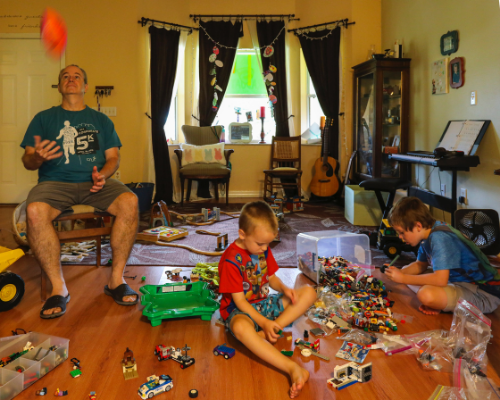
Be aware of what your child needs to self-soothe, and they will likely have less meltdowns. Many children with Asperger’s have intense sensory sensitivities that are not always predictable or consistent. Whenever a child has a negative experience with a sensory trigger, they often remember it and respond with increasingly stronger avoidance each time that they interact with the trigger. It is important as a parent to consult with an occupational therapist and obtain sensory-friendly soothing items that your child can have on them when needed to cope. I suggest that you trust your child when they tell you that they are overwhelmed, and exit an overwhelming environment, while helping them self-soothe. They can then let you know what was overwhelming to them and develop a plan. Many parents try to help their children endure this overwhelming stress, which leads to more intense emotions and a lack of trust. Ironically, fidget-spinners weren’t marketed as a soothing device, even they were incredibly successful at helping children slow down their brains to observe this thing spin for a minute or two, calming their bodies and calming their senses. Over the past year, I have found that many kids at home have gotten back into playing with Legos and “Minecraft.” There is even a type of therapy called Lego therapy, which teaches children cooperation skills, tactile awareness and self-advocacy. I often play “Minecraft” with kids in therapy. It is incredibly soothing and satisfying to build for hours at a time.
Slowing Down
When your child has difficulties communicating exactly what they are experiencing, it is incredibly important to just slow down and help them break down an overwhelming situation into individual parts. Anytime the child that I’m working with says that they don’t know what they’re really feeling, I make it an opportunity to practice connecting their thoughts with their feelings. In most situations in life if we’re able to figure out what is truly irritating us, we have a much higher chance of resolving the issue instead of leaving and avoiding the situation.
Connecting
Children with Asperger’s are often more interested in developing friendships than children with autism. I have found that through the pandemic, many local kids have been gaming with each other, using Discord or FaceTime. I would encourage you to not restrict this time if possible. Our kids have been so deprived of social interaction over the past few months, that I have seen them really shine after connecting with a friend, having a great time, or even sometimes getting very frustrated and working through their emotions with peers, rather than their parents or siblings. They need a break from us as much as we need a break from them sometimes.
Using collaborative problem-solving, where you show your child a lot of empathy, identify some concerns and develop a long-term agreement on how to approach common roadblocks as a family, rather than as a boss, will really help you connect with your child emotionally. They have just gone through the most difficult year of their lives and are ready to have fun. Let’s give them every opportunity to live life to its fullest from here on out.
Michael Uram is a licensed marriage and family therapist in Orange County, and author of “Parenting & Asperger’s.”







Leave a Reply
You must be logged in to post a comment.